
Serving Los Angeles, CA
& surrounding Areas

call us today
(818) 814-8494Serving Los Angeles and the San Fernando Valley



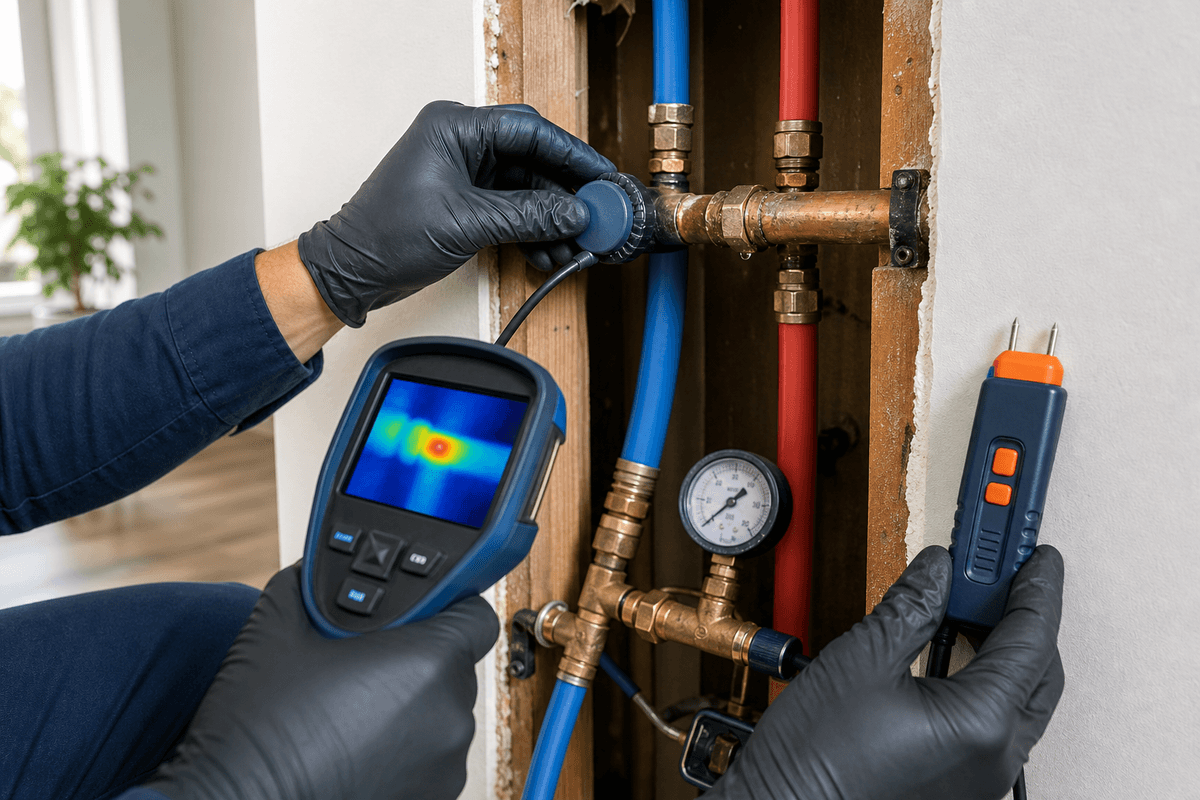
A professional water leak detection visit is a step-by-step effort to confirm whether water is escaping, narrow down where it is coming from, and determine the least disruptive way to reach it. The technician should not begin by guessing or opening walls at random. The process normally starts with your observations, continues with visible plumbing checks, and may include moisture, thermal, acoustic, or pressure testing based on the symptoms.
Los Angeles homes can conceal leaks beneath slabs, behind finished walls, around plumbing fixtures, or along outdoor water lines. Pipe material, building layout, and access conditions affect how the testing is performed. The goal is to gather enough evidence to make a sound repair decision without causing unnecessary damage.
What to Do Before the Technician Arrives
Write down when you first noticed the problem and whether it is constant or intermittent. Helpful details include higher water bills, damp flooring, peeling paint, musty odors, the sound of running water, warm floor areas, or stains that appear after using a particular fixture.
Take photos of visible damage and gather any recent plumbing repair information you have. Make the water meter, water heater, affected fixtures, and nearby cabinets accessible when possible. Avoid cutting into walls, applying sealants, or covering the damaged area before the inspection because those actions can hide useful evidence.
If water is actively flooding the property, shut off the affected fixture or main water supply when it is safe to do so. Stay away from wet electrical equipment and tell the technician what was shut off before the appointment.
The Visit Starts With Questions and a Visible Inspection
The technician will usually ask where you noticed the problem, when it occurs, and whether it changes when a toilet, sink, shower, washing machine, irrigation system, or water heater is used. Recent remodeling, appliance installation, or plumbing work may also help narrow the search.
A visible inspection may include supply connections, shutoff valves, faucets, toilets, the water heater, ceilings, baseboards, exterior piping, and the areas above or below the suspected leak. Water can travel along framing, pipes, or flooring before it becomes visible, so the stain you see is not always directly beneath the source.
The inspection may also identify a non-plumbing cause, such as condensation, an appliance drain, or water entering from outside. Separating those possibilities early can prevent repairs to the wrong system.
Plumbing-System Checks Help Narrow the Source
With fixtures and water-using equipment accounted for, movement at the water meter may indicate continuous water use somewhere on the property. Meter movement alone does not reveal the exact location, so the technician may isolate fixtures, appliances, or plumbing branches to see which part of the system changes the reading.
Pressure testing can help determine whether a pressurized supply line is losing water. A drain leak may require running a specific fixture because it may only appear while water is moving through the drain. Hot-water leaks can produce different temperature patterns than cold-water leaks, but temperature alone is not enough to confirm the source.
The testing sequence depends on the property. A wall leak, slab leak, fixture connection, and underground service-line leak require different checks. A careful technician follows the evidence instead of forcing every property through the same procedure.
Specialized Equipment Helps Locate Concealed Moisture
Professional leak detection equipment can provide clues without immediately removing finished materials. Depending on the suspected source, the technician may use:
- A moisture meter to compare moisture levels across drywall, flooring, cabinets, or other materials. The meter helps map the affected area, but one elevated reading does not automatically identify the broken pipe.
- A thermal imaging camera to identify temperature differences that may be associated with moisture or a leaking hot-water line. Thermal imaging shows surface temperature patterns; it does not see through walls or prove by itself that a pipe is leaking.
- Acoustic listening equipment to detect the sound produced by water escaping from a pressurized pipe. Pipe material, background noise, soil, and building construction can affect the result.
- Pressure gauges or controlled plumbing tests to determine whether a particular water line or section of the system can hold pressure.
The strongest diagnosis usually comes from several findings pointing to the same location. For example, a pressure loss, a concentrated moisture pattern, and a matching acoustic signal provide better support than any single reading by itself.
How the Technician Confirms the Most Likely Location
After collecting initial readings, the technician may test the area from more than one direction, trace the likely pipe path, compare nearby dry surfaces, and repeat measurements. For a suspected slab leak, testing may move between accessible plumbing connections and several points across the floor to narrow the search area.
Detection can substantially reduce unnecessary demolition, but it cannot guarantee that every concealed condition will be visible from the surface. A small inspection opening may occasionally be needed after the evidence has narrowed the location. The technician should explain why access is recommended and where it should be made.
Some leaks are intermittent and may not be active during the appointment. If the evidence is inconclusive, monitoring, repeat testing, or testing while the affected fixture is operating may be safer than approving a repair based on a guess.
What to Expect After the Diagnosis
Before choosing a repair, you should understand the most likely source, which tests support that conclusion, and what access may be required. Ask whether the water can remain on safely, whether a fixture should stay out of use, and whether there are different repair approaches.
The repair scope should distinguish plumbing work from wall, flooring, cabinet, drying, or restoration work. If moisture has spread beyond the plumbing access point, additional drying or property-restoration services may be needed after the leak is repaired.
Leak detection does not automatically mean extensive demolition or complete pipe replacement. A localized connection or damaged section may have a focused repair option. Widespread deterioration, repeated leaks, or inaccessible piping may justify discussing a broader solution. The diagnosis should provide the information needed to compare those choices.
Schedule Water Leak Detection in Los Angeles
Water stains, unexplained meter movement, damp flooring, peeling paint, running-water sounds, and rising water use can become more damaging when the source remains concealed. Professional testing can help identify the affected plumbing system and narrow the repair area before unnecessary surfaces are opened.
Call Andy's Plumbing & Drain Services at (818) 814-8494 to request professional water leak detection in Los Angeles and discuss the symptoms you are seeing.
Need plumbing help?
Plumbing services available in Los Angeles

Same-Day Service!
Services We Offer
Explore plumbing services available across Los Angeles for connected issues before they turn into larger repairs.




Plumbing Help
Find the right plumbing service for your home
Whether you are dealing with a clogged drain, hidden leak, sewer issue, water heater problem, or urgent repair, Andy's Plumbing can help you choose the next best step.